Stickers History: The Handwritten Script Font for Authentic Branding
Running a small business means wearing every hat. You are the CEO, the marketing director, the customer service rep, and often the graphic designer too. When you are designing your brand identity from scratch, it is easy to get overwhelmed by endless options. But after years of testing different visual elements, I have learned that one specific detail can make or break how customers perceive your professionalism: the font.
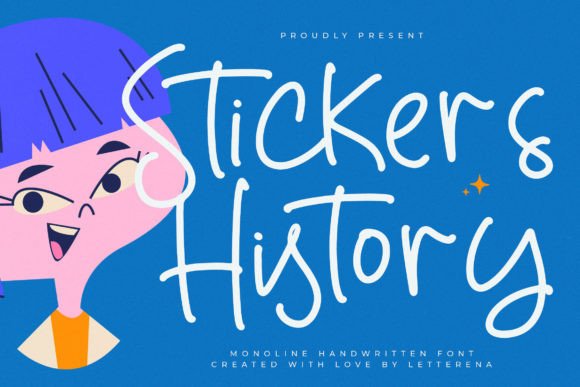
If you want your brand to feel personal, trustworthy, and memorable, typography is where you start. That is why I recommend Stickers History, a monoline handwritten script font from Letterena. It is not just another decorative typeface; it is a tool that helps bridge the gap between professional polish and human connection. Whether you are selling handmade candles, launching a coaching practice, or running a boutique café, this creative font can elevate your materials instantly.
Why Personality Matters in Modern Typography
In today’s saturated market, customers do not just buy products; they buy stories and feelings. A sterile, corporate sans-serif might look clean, but it often feels cold. On the other hand, overly ornate calligraphy can be hard to read and feels outdated. Stickers History hits that sweet spot. As a luxury script font, it carries a sense of elegance without being stiff. Its monoline structure gives it a modern, airy feel that works beautifully on social media graphics, website banners, and printed packaging.
When you use a handwritten font like this, you are signaling to your audience that there is a real person behind the brand. This is crucial for independent creators and entrepreneurs who rely on community and trust. It transforms a simple product label into a curated experience. For instance, imagine a bakery using Stickers History for its logo. The curves of the letters suggest warmth and homemade quality, whereas a blocky font might suggest mass production. This subtle psychological cue helps align your visual identity with your target customers’ expectations.
Real-World Applications for Small Businesses
One of the biggest challenges for small business owners is consistency. You need your brand to look the same whether a customer sees it on an Instagram post, a physical sticker, or a thank-you card inside their package. Stickers History is versatile enough to serve as a primary design asset across these touchpoints.
- Product Packaging and Labels: If you sell skincare, jewelry, or artisanal goods, your packaging is your first physical interaction with the customer. Using this script font for the brand name on a jar or box adds a layer of premium value. It looks intentional and high-end, which can justify higher price points.
- Social Media Content: In the feed of platforms like Instagram and Pinterest, text-based graphics perform exceptionally well. Use Stickers History for quote graphics, promotional announcements, or event flyers. Its readability at medium sizes ensures that your message is clear even on mobile screens, while its style stops the scroll.
- Digital Ads and Website Headers: For web design, headlines need to grab attention quickly. As a display font, Stickers History works perfectly for hero sections or sale banners. It draws the eye immediately, guiding visitors toward your call-to-action buttons.
- Stationery and Merchandise: Business cards, thank-you notes, and custom stickers are powerful retention tools. Printing your logo or a catchy slogan in this handwritten font makes these items feel like gifts rather than trash. Customers are more likely to keep a beautiful sticker or a nicely designed note card, keeping your brand top-of-mind.
Strategic Font Pairing for Professional Results
A common mistake new entrepreneurs make is relying on a single font for everything. While Stickers History is expressive, it should not be used for long paragraphs of body text. To maintain readability and a professional hierarchy, you need to pair it with a complementary typeface. This is where font pairing becomes essential for your brand identity.
The most effective strategy is to pair this decorative script with a clean, neutral typeface. Since Stickers History has a lot of personality, it needs a "quiet" partner to balance it out. A simple sans serif font is usually the best choice. The geometric clarity of a sans serif provides a stable foundation for detailed information like pricing, ingredients, contact details, and shipping policies. This contrast ensures that while your brand name pops, your important business information remains legible.
Alternatively, if your brand leans more traditional or literary, you might consider pairing it with a classic serif font. This combination can evoke a sense of heritage and reliability, which is excellent for established brands or businesses in the wellness and education sectors. The key is to ensure that the two fonts do not compete for attention. Let the script handle the emotion and the headline, and let the supporting font handle the facts.
Readability and Practical Testing
Before committing to a font for your entire brand, you must test it in real-world scenarios. A font that looks stunning on a large desktop monitor might become illegible when shrunk down to fit on a small coffee cup sleeve or a social media thumbnail. Stickers History is generally quite readable due to its open letterforms, but you should always print proofs.
Print your designs on the actual material you plan to use. Check how the ink sits on textured paper versus glossy sticker vinyl. Zoom out and view your designs on a smartphone screen to simulate how a customer will see them in their feed. If the thin lines of the script disappear or become muddy, you may need to adjust the weight or size. This practical step saves money on wasted prints and prevents embarrassing errors in your marketing materials.
Licensing and Commercial Use
As a business owner, protecting your intellectual property and avoiding legal issues is paramount. Not all free or cheap fonts allow for commercial use. Before you slap Stickers History on your merchandise, digital templates, or client work, you must review the license agreement provided by Letterena. Most premium fonts require a commercial license if you intend to sell products featuring the typeface. Ensuring you have the correct rights allows you to scale your business with confidence, knowing that your design assets are legally secure.
Investing in a high-quality commercial font is an investment in your brand’s longevity. Stickers History offers the perfect blend of artistic flair and functional design. By integrating it thoughtfully into your branding strategy, you create a cohesive, professional image that resonates with customers and stands out in a crowded marketplace.